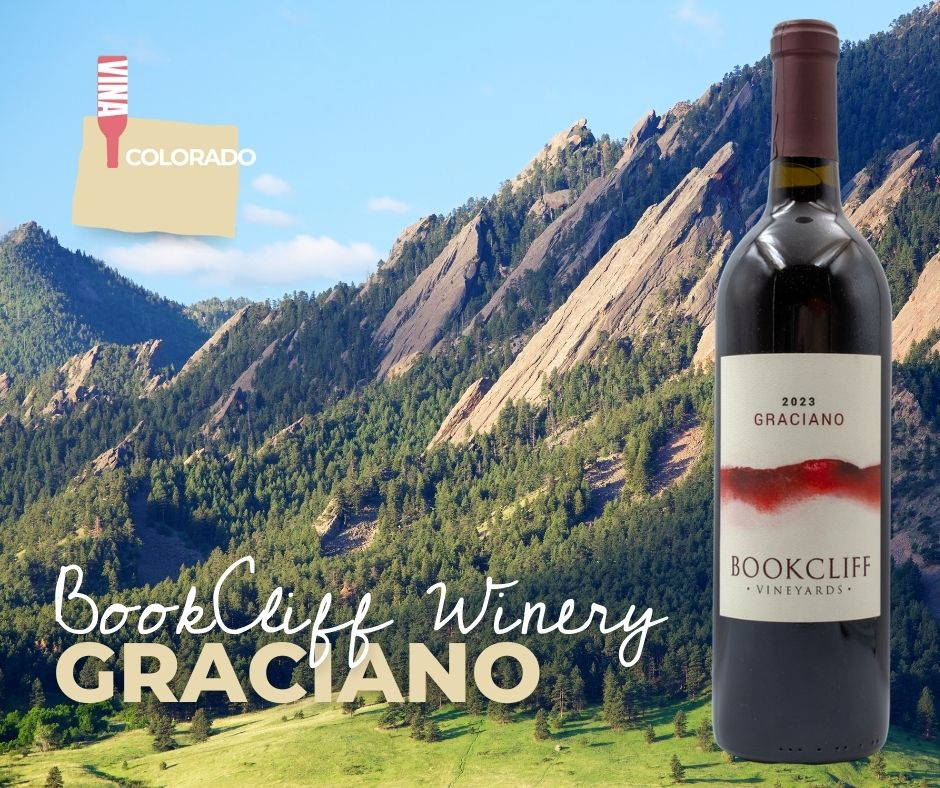
Or, It’s Time to Try Colorado Wines Again
If you had Colorado wine 20 years ago and thought, “Wow, this is terrible,” you weren’t wrong.
Twenty years ago, I would’ve agreed with you. When I first started drinking wine—somewhere in my late 20s or early 30s—I didn’t understand nuance. I didn’t know about grape varieties, growing regions, terroir, or what made a wine “good” versus just… drinkable.
Like most people, wine wasn’t something I studied; it was something that showed up at dinners, events, or work functions. My first “Fancy Wine” moment happened in my early 20s. I worked at a radio station that traded advertising for bar tabs and dinners. One Christmas, the entire office went to a steakhouse in downtown Denver—one of those places that has since turned over a dozen times.
At 24 or 25, it was wildly out of my price range and felt incredibly grown-up. This was the mid- to late- ’90s: pantyhose were mandatory, men wore suits, and everything felt formal. My boss (one of the better ones I’ve ever had TBH) and several of the sales team ordered what I now know was probably a very good bottle of wine. Likely a California Cab or maybe a French Bordeaux.
I tried it.
I wanted to like it.
But it was too dry and tasted like wood.
My Early Experiences With Colorado Wine
The first time I headed to the Western Slope for Colorado wine, I was closer to 30 and still had no idea what “good” wine actually was.
Colorado wine, though, has a much longer history than most people realize. Grapes were first planted here in the late 1800s, and wine was made alongside mining for decades before Prohibition.
Colorado even entered Prohibition earlier than much of the country, which devastated the industry. Vineyards were torn out and replaced with orchards—peaches, cherries, apples—which still dominate the Palisade and Grand Valley region today.
When Prohibition ended and the state slowly allowed wine production again in the 1970s and early ’80s, the industry restarted… awkwardly. A lot of early wineries were run by retirees—lawyers, bankers, hobbyists—who loved wine but didn’t yet understand harvesting timing, acidity, or balance.
Their customers, many of whom came from nearby Utah (where alcohol access is limited), preferred sweet wines. So wineries made sweet wines. And they sold.
By the 1990s and early 2000s, if you visited Palisade, you were likely to encounter a lot of fruit wines, sweet wines, and wines that—if we’re being honest—weren’t very good. If sweet wine was your thing? Great. If it wasn’t? Colorado wine probably lost you right there.
Falling in Love With Wine (Just Not Colorado—Yet)
At 33, freshly divorced and slightly lost, I attended a Denver Broncos charity wine event. I don’t remember the charity, but I do remember the Broncos players, Nuggets players, and a wine distributor who gave me a bottle of Portuguese wine. That bottle changed everything. From that point on, I drank California wine, South American wine, European wine—but I avoided Colorado wine completely.
And Then… Everything Changed
Fast forward to a trip to Palisade before the pandemic. The wine had changed. And so had I. A new generation of winemakers had moved into the Grand Valley—people who understood viticulture, chemistry, harvest timing, and how to work with growers instead of around them.
Grapes were harvested intentionally, styles were chosen deliberately, and the trial-and-error years were finally paying off.
Today, Colorado is my favorite wine region. I visit four or five times a year. I belong to multiple wine clubs. I work with several wineries in the Grand Valley. In summer and fall, I sell wine at farmers’ markets. I talk to grape growers, winemakers, assistants, and cellar hands. I’ve fully (and happily) weaseled my way into the industry because I want to learn everything I can.
Why You Should Try Colorado Wine Again
If you haven’t had Colorado wine in 20 years, 10 years, or even 5 years…Try it again.
The high-desert growing conditions—cool nights, hot summer days, and even with a shorter growing season—are producing award-winning wines. Grape varieties that thrive in regions like Hungary, Italy, Germany, and Argentina, are flourishing here. The results are wines that hold their own on national—and increasingly international—stages.
Are there wines in Palisade that I don’t drink? Sure. There are still the sweet wines, the fruit wines, and the questionable wines. But someone loves them. And that’s the beauty of wine. Wine has been with us throughout human history. It meets the moment. It reflects the people who make it and the people who drink it.
Colorado wine has grown up—and it’s time to give it the credit it deserves.